Yes, you can heat a workshop with waste oil, as long as you buy a purpose-built heater sized to the oil you really collect and the heat your building really loses. The figure that should drive the purchase is litres of oil per season, not square metres of floor. A heater that out-burns your supply has you buying fuel in July, and one that under-burns it leaves drums stacking up against the back wall.
How a Waste Oil Burner Turns Dirty Oil Into Shop Heat
Used oil straight from a sump or a fryer is a difficult fuel. It thickens in the cold, carries water and fine metal from engines, and in the case of cooking oil, food solids and fats that set at room temperature. A purpose-built heater exists to turn that inconsistent liquid into a steady, clean flame, and it does so with a chain of parts that each solve one problem.
The chain starts at storage, where oil sits long enough for water and heavy sludge to settle to the bottom, away from the draw-off point. From there a feed system delivers oil to the burner at a controlled rate. Before it can burn cleanly, the oil has to be thinned and broken into fine droplets so it mixes with air, because a pool of thick oil smokes and soots instead of combusting.
Combustion happens inside a sealed chamber, and the heat passes through a heat exchanger. That exchanger is the part that matters most for a workshop: it keeps the combustion gases on one side and the air or water you are heating on the other. The gases leave through a flue. In a space heater, a fan pushes shop air across the hot exchanger. In a hydronic system, water passes through the exchanger instead and is pumped out to radiators or floor loops, often split into separate zones.
The consequence for planning is simple and often missed. Because the feed sets the burn rate, a given heater consumes oil at a roughly fixed rate per hour of firing. Multiply that by the hours you expect to run it across winter and you have its seasonal appetite, which you can compare against your own drum log before you spend a dollar.
Why Burning Used Engine Oil Goes Wrong in Improvised Heaters
Improvised burners fail because the fuel changes and nothing in the device responds to it. Engine oil, gearbox oil and hydraulic fluid have different viscosities, and all of them thin out as they warm. A drip-fed pot that runs cleanly at mid-morning will flood or starve by afternoon as the shop warms and the oil flows differently.
Water is the next leak in the design. A drum left outside picks up condensation and rain, and water in the oil makes a flame spit, stall and relight unevenly. Settled storage and a high draw-off handle this in a proper system; a hose dropped into the bottom of a drum feeds the burner the worst of it first.
The deeper problem is that most homemade units have no heat exchanger at all. The flame heats a steel box, and the room air mixes freely with whatever the burner is producing. In a closed workshop full of people, that is the wrong place to be learning how complete your combustion is.
Then there is the paperwork. Burning oil is regulated as waste disposal in parts of Australia, and an appliance you welded yourself gives an insurer or an inspector nothing to assess. A manufactured heater at least gives you a defined appliance to discuss with your state environment authority.
Setting Up Oil Heat in Your Workshop, in Order
Log the oil you generate for a full season before choosing a heater, counting drums or litres per month, and note the dips, such as holiday shutdowns, when collection falls.
Estimate the building's heat loss from its real condition: wall and roof insulation, roller doors that open through the day, ceiling height and draughts around the eaves.
Compare the two figures, and where your oil cannot cover the full heating season, plan for a top-up fuel or a smaller burner rather than a bigger one.
Choose the delivery method: a direct space heater for one open shop, or a hydronic system when the office, amenities and floor need heat on separate schedules.
Contact your state EPA about authorisation for burning oil as fuel at your site, and keep the response with your records.
Set up storage that lets oil settle, keeps rain out and draws from above the sludge layer, with filtration between tank and burner.
Keep vegetable oil from food businesses clear of food solids, and keep solvents, coolant and parts-washer fluid out of every drum, so burning used cooking oil for heat stays as predictable as burning engine oil.
Have the heater and flue installed properly, then record running hours and oil use through the first winter so you can confirm your sizing against reality.
Mistakes That Make Oil Heat Expensive
Sizing from floor area alone is where most budgets go wrong. Two sheds of the same footprint can lose heat at very different rates, and a heater chosen from a square-metre chart may need far more oil than the business produces. Start from your oil log and your heat loss instead, and let the floor area be the last check.
A drum of mystery fluid can undo a good installation. Brake fluid, coolant, thinners and degreasers find their way into waste oil when one drum serves the whole workshop. Give oil its own labelled containers, and tell staff that anything else goes elsewhere.
Treat "free fuel" with care. Oil is the cheapest way to heat a workshop only while you generate it yourself or collect it at no cost; once you start buying oil to keep the burner going, the economics change. That usually signals an oversized heater rather than a fuel problem.
Skipping maintenance costs more than the service would have. Soot on a heat exchanger cuts the heat that reaches the shop, so the burner runs longer for the same comfort and drinks more oil. Book a yearly professional check of the flue and combustion chamber, and clean between visits as the manufacturer directs.
Forgetting the people in the building is a planning error, too. An open-plan air heater suits a single shop floor, but an office or lunchroom that needs steady warmth when the roller doors are open will never be comfortable on the same blast of hot air. Zoned hydronic heat solves that, and it is far easier to design in at the start than to add later.
The penalty is concrete. In Tasmania, an infringement notice for offences related to wood heater standards and burning prohibited waste carries an on-the-spot fine of 5 penalty units, which the EPA puts at $1,025 in 2025/26. That is a single notice, and it applies whether the oil was burned in a manufactured heater or a cut-down gas bottle, which is exactly why the authorisation step comes before installation.
On whether waste oil heating is cheaper than wood, the honest comparison rests on what you already have. If your workshop produces a steady flow of oil, the fuel side of the ledger is close to nothing. If you have a reliable timber supply and room to store it, wood has a strong efficiency case: our wood gasification hydronic boilers run at 90%+ efficiency, under certification B32 00842 14. Wood must be adequately seasoned to avoid creosote buildup. Pick the fuel your business already generates or can store well, not the one with the better brochure.
How We Size and Supply Oil Heating
Our core business is the heating and burning of waste oil and wood. We supply waste oil heaters for domestic and commercial space heating. Our heaters burn used or unused automotive and vegetable oils. That matters for workshops whose drums hold a mix from the service bays and a nearby food business.
For buildings with more than one heated area, the choice between a direct heater and a waste oil boiler comes down to how the space is used. We also design hydronic heating from recycled waste and used oils. Our hydronic design services cover multiple independent heating zones, so an office, a parts store and a shop floor can each run to their own schedule from one oil supply. We serve domestic, commercial, farming and industrial heating. One visitor put the appeal plainly:
"At the recent 2015 AAAA show at the Melbourne Exhibition Centre, we met with the Kroll team and loved what the guys had to say about domestic heating and workshop space heating from old dirty waste oils. Thanks again." (George Taylor)
If your oil output is small or irregular, oil may not be your best fuel, and we will say so. In our wood gasification system, the boiler charges a 330 litre accumulating water tank, originally via a Laddomat circulator and valve, now replaced by an LK 810 charging valve that protects the boiler from condensation and manages hot water accumulation. Those boilers need regular cleaning to remove ash and annual professional checks. Our wood pellet hydronic boilers are available in 2026 for sites that prefer a more uniform fuel than split timber. Whatever the fuel, we advise professional annual checks for the chimney and combustion chamber.
Bring us your oil log and a description of the building, and we will help you match a heater to both. You can reach us at sales@krollheat.com, on 1800 805 243, or at Factory 6, 4 Kirkham Rd, Dandenong Victoria 3175.
Frequently Asked Questions
How much waste oil do I need to heat a workshop?
It depends on the heater's burn rate and how many hours you run it, so the useful question runs the other way: how much oil do you produce? Log your drums or litres per month across a full season, including slow periods. Then choose a heater whose hourly consumption, multiplied by your expected winter running hours, fits inside that figure. If your supply falls short, a smaller burner or a top-up fuel is a better answer than an oversized heater that runs dry partway through winter.
Can I burn used cooking oil and engine oil in the same heater?
A heater built for both can handle a mixed supply, and our heaters burn used or unused automotive and vegetable oils. The work is in preparation. Cooking oil from food businesses should be free of food solids, and every drum should be kept clear of solvents, coolant, brake fluid and degreasers. Let the oil settle so water and sludge stay below the draw-off point, and filter it before it reaches the burner. Consistent fuel gives a consistent flame.
Is it legal to heat my workshop with waste oil in Australia?
Rules differ by state, so check with your state EPA before installing anything. Tasmania's EPA lists oil as a prohibited waste for heating or cooking unless specifically authorised, and burning prohibited waste can bring an on-the-spot fine. In Victoria, used oil sits within EPA Victoria's Industrial Waste Resource Guidelines. Get your site's position in writing, keep it on file, and treat that step as part of the installation, done before the heater arrives rather than after.
Should I choose a waste oil space heater or a hydronic boiler?
A direct space heater suits one open shop where the goal is warm air across the floor. A hydronic system suits buildings with several areas that need heat at different times, such as an office, amenities and the workshop itself, because it can run multiple independent zones from one heat source. If staff complain that the office is cold whenever the roller doors open, that is the case for hydronic design.
Wood Fired Hydronic Heating: The Complete 2026 Guide for Homeowners
According to the National Audit Office, heating the UK’s 28 million homes accounts for 18% of all UK emissions. For the growing number of households sitting off the main gas grid, rural properties, farmhouses, and large country homes, wood fired hydronic heating represents one of the most practical routes to lower carbon bills and genuine energy independence. If you are weighing up whether a wood pellet boiler or a log gasification system makes sense for your home, this guide covers exactly how these systems work, what they cost, and what the research says about getting the best out of them.
Key Takeaways
Water beats air for heat distribution:A hydronic heater heats a water loop, which carries thermal energy far more efficiently over distance than air does. That efficiency advantage means every unit of fuel goes further in a well-designed hydronic system.
Modern pellet boilers reach very high efficiencies:Efficiencies range from 70 to 91% for different boilers running on wood pellets. Therefore, choosing an EN-certified pellet boiler, not a basic log stove, is the single fastest way to improve your heating economics.
A buffer tank is not optional:Increasing the amount of thermal storage storage decreases cycling rates, leading to decreased emissions and increased efficiency. Without thermal storage, integrated efficiency over a 15% load test period was 57%, compared to 74% when thermal storage was used. Fit a properly sized buffer tank from day one.
Government grant support is available:The Boiler Upgrade Scheme administered by Ofgem on behalf of DESNZ, provides grants for property owners in England and Wales to replace existing fossil fuel heating with low-carbon heating systems. It provides £5,000 towards the cost of a biomass boiler.
Carbon savings are substantial versus oil:Data from the Energy Saving Trust shows that installing a pellet biomass boiler can save up to 4,200 kg of CO2 per year, depending on the age of your current gas heating system. That means you should act on decarbonisation now rather than waiting for a gas-grid upgrade that may never reach your postcode.
Quick-Start Prioritisation Framework
System Type
Best For
Effort Level
Time to Results
Automated pellet boiler + buffer tank
Off-grid rural homes wanting low maintenance
Low (once installed)
Weeks
Log gasification boiler + large thermal store
Properties with own woodland or cheap log supply
Medium (daily loading)
Weeks
Outdoor wood boiler (OWB)
Farms, multi-building properties
Medium
Weeks
Hybrid pellet boiler + backup heat pump
Large homes needing peak-demand cover
Low
Months
Wood pellet boiler stove (integrated)
Smaller homes or flats with existing wet system
Low
Days to weeks
Start here if you are:
Off-grid and currently burning oil or LPG: An automated pellet boiler is your fastest payback option. Pellet prices are more stable than heating oil, and the £5,000 Boiler Upgrade Scheme grant applies.
A farmer or rural landowner with timber: A log gasification boiler with a large buffer tank turns your own woodland into your fuel supply.
Building new or undertaking a major renovation: Combine an efficient wood pellet boiler with underfloor heating loops for the lowest possible water temperatures and highest overall system comfort.
How Wood Fired Hydronic Heating Actually Works
The Core Principle: Heating Water, Not Air
A hydronic heater burns wood or pellets to heat water instead of air, then distributes that heat through radiators, radiant floor loops, a heat exchanger in a furnace plenum, or domestic hot water, letting one appliance, often located outside the living space, heat an entire house.
That water can feed baseboard radiators, panel radiators, radiant floor tubing, a coil in an existing forced-air furnace’s plenum, or an indirect domestic hot water tank, often several of these at once from one firebox. This versatility is why hydronic systems are so popular in rural properties: a single boiler can cover space heating, domestic hot water, and even a heated workshop or outbuilding.
Indoor, Outdoor, and Gasification Designs
Outdoor wood boilers sit in a small shed-like structure outside the house and send insulated supply and return lines underground to the building. Indoor boilers install inside a basement or mechanical room like a conventional oil or gas boiler, venting through a chimney.
There are two main types of wood-fired hydronic heaters: outdoor wood boilers and dual-stage wood gasification boilers. Both types can also provide domestic hot water. Gasification boilers will operate more efficiently, especially when used with a heat storage water tank.
Pro Tip: If you are choosing between a conventional outdoor boiler and a gasification model, the gasification design almost always wins on long-term running cost. The secondary combustion chamber burns off gases that would otherwise leave as smoke, keeping more energy in your heating loop and less going up the flue.
What the Boiler System Needs Around It
The core components include the wood firebox or combustion chamber, heat exchanger, boiler or heater, circulation pump, storage or buffer tank, and a distribution network, such as radiators or underfloor piping. Each component has a job, and skimping on any one of them, particularly the buffer tank, leads to the inefficiency and short-cycling problems that give wood boilers an undeserved bad reputation.
Efficiency: What the Numbers Really Mean
Rated Efficiency vs. Real-World Performance
In laboratory settings, wood pellet boilers can achieve efficiency levels over 90%. However, in real-world conditions, the average gross efficiency of wood pellet boilers tends to be around 70% gross, according to a study by BEIS. That 20-point gap matters. If your installer quotes a headline efficiency figure without discussing buffer tank sizing and load matching, push back and ask for field-condition estimates.
Increasing the amount of thermal storage tests of pellet boilers, efficiency is determined in steady-state operation at full load and 30% of full load. In the field, efficiency was found to be 6.9 to 24.4 percentage points lower than efficiencies certified by laboratory tests at nominal load, due to cycling. The lesson: a boiler that cycles constantly because it is oversized or lacks a buffer tank will underperform its nameplate rating significantly.
Why the Buffer Tank Changes Everything
Biomass boilers perform best with steady, longer combustion cycles instead of frequent starts and stops. Without a buffer tank, a boiler can produce more heat than the building immediately needs, causing overheating and short cycling. Short cycling causes real problems: lower fuel efficiency, more smoke or incomplete combustion, higher emissions, more soot and creosote buildup, faster wear on ignition and control components, and less stable indoor comfort.
A Increasing the amount of thermal storage found that Increasing the amount of thermal storage storage used decreases cycling rates, leading to decreased emissions and increased efficiency, with integrated efficiency rising from 57% to 74% when thermal storage was used. That 17-percentage-point improvement translates directly into lower fuel bills and longer boiler life. Size your buffer tank generously.
Pellet boiler systems run most efficiently at full load and can usually be regulated down to 30% of full load. Since the warm-up phase of pellet boilers usually takes longer than for oil or gas firing systems, short burning phases have a negative effect on fuel efficiency. Use only ENplus-certified pellets and store them bone dry. Wet pellets break down into dust, block feed augers, and drop your boiler’s real-world efficiency sharply.
Heat Distribution Options: Radiators, Underfloor, and Beyond
Panel Radiators: The Straightforward Retrofit
Panel radiators remain the easiest distribution option for properties converting from oil or gas. The pipework layout is familiar, the controls are well understood, and the water temperatures from a wood pellet boiler, typically 70 to 85°C at the boiler flow, are well within the range that existing radiator circuits expect. In my experience, a well-sized radiator circuit with thermostatic radiator valves gives very comfortable control with minimal fuss.
Underfloor Heating: The Best Long-Term Match
The US Department of Energy has found that duct systems can lose 25 to 40% of heating energy to leakage and conduction through unconditioned spaces. A hydronic radiant system has no ducts. All of the energy that enters the system goes into the floor and then into the room.
Underfloor heating requires lower water supply temperatures (typically 35 to 55°C), which means a mixing valve must step down the boiler’s higher flow temperature before water enters the floor loops. The water that runs through a floor for radiant floor heat is never warmer than 120°F (approximately 49°C). Hotter temperatures will crack the floor if you have concrete and may warp wood flooring at higher temperatures. Get a competent hydronic engineer to size your mixing valve correctly, this is the step most DIY installs get wrong.
Pro Tip: If you are planning a new build or a full renovation, design your underfloor heating and wood pellet boiler together from the start. Lower flow temperatures mean the boiler works less hard, particulate emissions drop, and the system’s lifetime operating cost falls significantly.
Heating Multiple Buildings From One Boiler
Heated water is transported through underground insulated pipes to nearby houses and buildings to provide space heating and domestic hot water. Unlike traditional indoor wood stoves, an outdoor boiler keeps the mess of wood storage, ash, insects and potential smoke outside the home. For farms and rural estates with multiple structures, this single-boiler approach is often the most cost-effective route, provided the pipe runs are properly insulated to minimise heat loss.
Costs, Grants, and Running Economics
What Does Installation Cost?
In 2026, a fully installed automated pellet boiler typically costs £10,000 to £19,000, with log batch boilers a little cheaper. Larger systems with bulk hoppers and big buffer tanks can reach £25,000 or more.
A typical UK home uses between 3 and 8 tonnes of biomass fuel per year, depending on the size of the property, the boiler type, and how well-insulated the home is. Wood pellets for a 20,000 kWh annual demand typically cost £1,300 to £1,900 per year. That compares very favourably with heating oil costs for equivalent output, particularly given oil’s price volatility.
The Boiler Upgrade Scheme Grant
The Boiler Upgrade Scheme is a grant for people in England and Wales to get up to £7,500 off a low carbon heating system. For biomass boilers specifically, the current grant is £5,000 towards a biomass boiler, but you are only eligible if the property is in a rural location and not connected to the gas grid.
The grant is installer-led. Ofgem says MCS-certified installers apply for and redeem Boiler Upgrade Scheme vouchers on behalf of property owners. In practice, the grant should normally appear as a deduction from the quote rather than money paid to the homeowner. Always confirm your installer holds current MCS certification before signing a contract.
Long-Term Fuel Price Stability
Pellets are produced locally from renewable by-products, which protects prices from global oil and gas market volatility and geopolitical disruptions. Because wood pellets are often more price-stable than heating oil or LPG, the long-term savings are most significant for those currently relying on expensive tankers. Over a 10-year period, fuel savings alone can often cover the remaining installation costs.
At Kroll Heaters, for example, the emphasis is on matching boiler output precisely to the building’s heat loss calculation, avoiding the oversized boiler trap that is responsible for most of the cycling inefficiency described above.
Renewable fuel with a near-closed carbon cycle, the CO2 released when you burn wood wood is the same amount that the tree absorbed while it was growing. The process is carbon neutral if new plants continue to grow in place of those used for fuel.
Whole-house heat and domestic hot water from one unit
Compatible with radiators, underfloor heating, fan-coil units, and existing wet systems
Fuel price more stable than oil or LPG
Modern pellet boilers and furnaces have automated sensors to control combustion, along with automated fuel loading, so the operator may only need to clean out the ash tray once or twice a month.
Eligible for the UK’s Boiler Upgrade Scheme grant (rural, off-gas-grid properties)
Cons:
Higher upfront cost than a conventional gas or oil boiler
Requires dry, dedicated fuel storage space
Annual servicing by a qualified biomass engineer is mandatory
Water must be heated and pumped to every part of the house, which takes longer than heating and distributing air from a forced-air system.
Emissions from poorly maintained or incorrectly loaded boilers can be significant
It can be difficult and expensive to retrofit a hydronic radiant system; the best installation time is during new construction or remodelling.
The Three Mistakes That Kill Efficiency
Oversizing the boiler. I’ve found this is the single most common error in wood boiler installations. A boiler that is too large for the building load spends most of its life cycling on and off at partial load, precisely the condition that drives real-world efficiency down below 60%.
Skipping the buffer tank.Unlike oil or gas heating systems pellet heating systems require the integration of a hot water tank in the heating system in order to reduce heat losses. Treat this as non-negotiable.
Using poor-quality or damp pellets.The storage area must be dry since the pellets react hygroscopically on damp walls or in high humidity during storage, causing crumbling. Crumbled pellets block feed augers and drop combustion efficiency sharply.
Pro Tip: Before commissioning your new wood pellet boiler, ask your installer to carry out a full heat loss calculation for your property. The boiler output should match that figure closely. A correctly sized system, paired with a buffer tank of at least 50 litres per kW of boiler output, will deliver the efficiency figures manufacturers advertise.
This overview of pellet stove ownership covers the practical benefits and drawbacks that buyers most commonly encounter, which maps closely to the considerations discussed below.
Frequently Asked Questions
What is wood fired hydronic heating and how does it differ from a wood stove?
A wood stove or forced-air furnace heats air directly and moves it by convection or ductwork. A hydronic heater instead heats a water loop, which carries thermal energy far more efficiently over distance than air does. The practical difference is that a hydronic system can heat every room in the house, including domestic hot water, from a single appliance, whereas a wood stove primarily heats the room it sits in.
How efficient is a wood pellet boiler in real-world use?
In real-world applications, the efficiency of pellet stove boilers can vary depending on several factors, such as the quality of the pellets, the size of the boiler, and the heating load. However, on average, a well-maintained and properly installed pellet stove boiler can achieve an efficiency rating of 80% to 90%. Fitting a correctly sized buffer tank and using ENplus-certified pellets are the two most reliable ways to stay towards the top of that range.
How much does a wood pellet boiler cost to install in the UK?
A log or batch boiler typically costs £7,000 to £12,000 installed. An automated wood pellet boiler runs from £10,000 to £19,000. A larger pellet system with hopper and buffer tank can reach £16,000 to £25,000. Eligible rural homeowners can deduct £5,000 via the Boiler Upgrade Scheme, making the net cost of a mid-range automated pellet system broadly comparable to a heat pump installation.
Can a wood pellet boiler run underfloor heating?
Yes, but it requires a mixing valve to reduce the boiler’s flow temperature (typically 70 to 85°C) down to the 35 to 55°C range that underfloor circuits need. Wood pellet boilers connect to the piping and distribution in your home and allow you to use radiant heat, baseboards, or other current central heating systems. A qualified hydronic engineer should design the mixing arrangement and zone controls to protect the floor structure and maximise efficiency.
Is a wood pellet boiler suitable for a property that is not off-grid?
The economics are strongest for off-grid properties replacing oil or LPG, where pellets offer more stable pricing year-round, reduce reliance on fossil fuels, and pellet heating is considered carbon neutral. If you are on mains gas, a pellet boiler will generally cost more to run than a modern condensing gas boiler, though the carbon case remains strong. The Boiler Upgrade Scheme grant for biomass is also restricted to rural, off-gas-grid properties.
Performance Evaluation of Two 25 kW Residential Wood Pellet Boiler Heating Systems, ACS Energy & Fuels (peer-reviewed). Efficiencies range from 70 to 91%
Effect of Thermal Storage on Emissions and Efficiency of a Wood-Pellet-Fired Residential Boiler, ACS Omega (peer-reviewed). Increasing the amount of thermal storage
Why Waste Oil Heating Makes Sense for Rural and Off-Grid Operations
If you run a farm, rural workshop, or off-grid property, you already know the frustration of heating costs that arrive on top of everything else. Businesses like farms and construction sites face a relentless problem each winter: heating costs. What many rural operators do not realise is that the answer may already be sitting in drums behind the shed. Waste oil heating turns a disposal headache into a free energy source, and when done correctly in Australia, it is entirely legal and genuinely practical.
Key Takeaways
Waste oil heating is legal in Australia under strict conditions: Purpose-built heaters, proper fluing, on-site oil sourcing, and bunded storage are the non-negotiable requirements. Using non-compliant equipment or burning oil in open fires is illegal and carries serious EPA fines.
The fuel cost can be effectively zero:If you generate a sufficient supply of your own waste oil, the cost of heating with waste oil is zero. Compared with LPG at 4.2c/MJ, If you generate a sufficient put waste oil at just 0.8c/MJ, a dramatic difference for any rural operation already collecting used engine and hydraulic oil.
Improper disposal is a serious environmental risk: Waste oil that makes its way to the ground can pollute the soil and reach groundwater, contaminating a potential source, and one litre of waste oil can contaminate one million litres of water. Burning it in a compliant heater removes that risk entirely.
Payback periods are short:Most operations save $3,000-$10,000 per year on heating fuel alone, with a typical break-even period of just one to three years. Therefore, if your property produces regular waste oil volumes, a purpose-built heater is worth prioritising this season.
Quick-Start Prioritisation Framework
Scenario
Best Approach
Effort Level
Time to Results
Farm producing tractor/equipment oil
On-site waste oil space heater
Low
First winter
Rural workshop with consistent oil volumes
SZ-series or Kozy-style forced-air heater
Low-Medium
1-2 seasons
Off-grid property, slab or hydronic heating
Waste oil boiler with hydronic circuit
Medium
1-2 seasons
Property accepting oil from off-site sources
Seek EPA and waste transport advice first
High
Variable
Start here if you are:
A small farm or workshop: A forced-air waste oil heater is the lowest-cost, fastest-payback entry point. Burn only oil generated on your own property.
Running an off-grid homestead: A hydronic waste oil boiler integrated with slab or radiator heating delivers consistent, quiet warmth without grid reliance.
Unsure about compliance: Contact your state EPA before purchasing any equipment. Victoria’s framework is a useful benchmark; other states have similar obligations.
A waste oil heater is a specialised furnace designed to handle the impurities and higher viscosity found in used oil. Key components include a preheater that warms the oil for better combustion, a burner unit that atomises oil into a fine mist for clean burning, a combustion chamber that generates heat, and a heat exchanger that distributes heat through the facility.
Direct combustion of waste oil can supply daily residential energy in households, and self-atomisation and complete combustion can be achieved by recycling combustion heat to pre-heat the waste oil and decrease its viscosity. This is the critical point: a purpose-built atomising or vaporising burner running at high temperature produces clean, complete combustion. A DIY burn barrel does not.
What You Can and Cannot Burn
Modern multi-fuel heaters can burn any petroleum-based fuel including used oil, transmission fluid, hydraulic fluid, and diesel fuel. However, never introduce antifreeze, paint thinners, solvents, or coolant into a waste oil heater. These contaminants can produce toxic emissions and will put you in breach of state EPA regulations immediately.
Pro Tip: Filter your waste oil before it enters the heater’s storage tank. A basic sediment filter removes water and particulates, reduces ash build-up inside the combustion chamber, and extends service intervals significantly.
The following video demonstrates how a DIY waste oil heater functions in practice, showing the combustion process and basic construction from start to finish.
The Australian Legal Framework: What Rural Operators Must Know
When Burning Waste Oil Is Legal
Burning used oil is legal in Australia when done with purpose-built, compliant equipment under the right conditions. Underpinning Victoria’s Environment Protection Act 2017, which came into effect on 1 July 2021, is the General Environmental Duty. The GED is central to the Act, and businesses must reduce the risk of their activities that potentially harm the environment or human health through pollution or waste.
Under state EPA frameworks, burning waste oil is permitted for commercial and workshop space heating using purpose-built heaters and burners. Equipment must achieve complete combustion without discharging visible smoke, offensive odours, or toxic airborne particulates. Small-scale workshop heaters operating below 3 MW thermal capacity in Victoria generally do not require complex industrial licensing, provided they comply with local planning, building, and general environmental duty regulations.
When It Becomes Illegal
The line is clear. Burning used motor oil in open pits, drums, or backyard incinerators is strictly prohibited. Burning oil in modified gas bottles, drip pots, or improvised appliances that discharge black smoke is illegal. A person commits an offence if they contravene the General Environmental Duty in the course of conducting a business or undertaking, with penalties reaching 2,000 penalty units for a natural person and 10,000 penalty units for a body corporate.
Accepting commercial quantities of waste oil from off-site sources without proper EPA waste tracking and transport permits is also illegal, and doing so can reclassify your property as a waste treatment facility subject to full EPA licensing.
Pro Tip: Burn only the oil generated on your own property. This keeps compliance straightforward and keeps regulators off your doorstep. Sourcing oil from neighbouring farms or workshops triggers additional permit requirements in most states.
Storing Waste Oil Safely on Rural Properties
The Bunding Requirement
Before your heater even ignites, your oil storage must comply with Australian standards. Australian Standard AS1940:2017 covering the storage and handling of flammable and combustible liquids, is the national benchmark applying across every state and territory. The practical outcome for rural operators is straightforward.
Australian regulators, including EPA NSW, refer site operators to AS 1940 when determining capacity requirements. In practice, a bund must be capable of containing at least 110% of the volume of the largest container stored, or 25% of the total stored volume, whichever is greater. Therefore: if your waste oil drum holds 200 litres, your bund must hold at least 220 litres. Get that right before you store a single litre.
Labelling and Separation
Both waste oil and waste coolant are Prescribed Industrial Waste fluids, and disposing of or losing containment of these liquids carries serious environmental and financial repercussions. Even a small spill can create a significant environmental issue, one litre of oil disposed of incorrectly has the potential to contaminate one million litres of water.
Keep waste oil in clearly labelled, dedicated containers, separate from coolant or fuel. Australian legislation forbids the disposal of waste oil into soil or stormwater and outlines requirements for prevention of spills by ensuring oil is stored in a bunded and covered area in appropriate containers.
In rural areas where propane deliveries can be inconsistent or costly, a waste oil heater offers off-grid, low-cost warmth for barns, shops, and greenhouses. For properties far from town, this removes reliance on fuel delivery schedules and price volatility entirely.
Farm Machinery Produces the Fuel Naturally
Agricultural operations often have access to surplus oil from machinery, and waste oil systems can help provide affordable heating for barns and greenhouses. Tractors, diesel pumps, generators, and farm vehicles generate used engine and hydraulic oil continuously. That oil was previously a disposal cost. A compliant heater converts it into a heating asset.
Environmental Responsibility on Your Land
Heating with waste oil reduces the need for other heat sources like natural gas, electricity, and propane, directly saving money on heating bills while offsetting demand for those fuels in energy markets. For rural operators who care about what happens to their land and waterways, burning waste oil in a compliant, high-temperature heater is genuinely the responsible choice compared with improper storage or disposal.
Kroll Heaters Australia has been supplying purpose-built waste oil heaters and boilers to Australian farms, workshops, and off-grid properties for decades. Recent projects include a Leongatha, Victoria dairy farm running a 90-degree hot water system using a Kroll SF6 Waste Oil Boiler. Their range covers forced-air workshop heaters through to full hydronic boiler systems suitable for slab heating and radiator circuits.
Pro Tip: If your property runs both a workshop and living quarters, consider a hydronic waste oil boiler. A single unit can supply hot water to radiators, in-slab systems, and domestic hot water simultaneously, all from oil you are already collecting.
Frequently Asked Questions
Is burning waste oil legal on my farm in Australia?
Yes, provided you use purpose-built, compliant equipment and burn only oil generated on your own property. Under state EPA frameworks such as Victoria’s Environment Protection Act 2017, farm and workshop space heating from on-site waste oil is permitted. Open burning, DIY burn barrels, and non-compliant heaters are illegal and carry substantial fines. Check your specific state EPA’s requirements before purchasing equipment.
What types of oil can I burn in a waste oil heater?
Compliant heaters can operate using most waste oils of mineral and plant origin, including engine, gear, hydraulic, and fuel oil, provided the oil has a maximum density at 15°C of 860 kg/m³ and an ignition temperature exceeding 56°C. Never introduce solvents, antifreeze, paint thinners, or coolant, as these produce toxic emissions and constitute illegal burning under EPA legislation.
How much waste oil does a heater actually consume?
A Kozy-style waste oil heater suitable for spaces up to 300m² uses approximately two litres of waste oil per hour on low and three litres per hour on high. A typical farm generating regular machinery oil can sustain a heater of this size comfortably through the colder months. If your volumes are lower, consider a smaller unit or a hydronic boiler that retains heat in water for longer periods between burn cycles.
Do I need EPA approval to run a waste oil heater in Victoria?
Small-scale workshop heaters operating below 3 MW thermal capacity generally do not require complex industrial EPA licensing in Victoria, provided they comply with local planning and building regulations and meet the General Environmental Duty under the Environment Protection Act 2017. You must use purpose-built equipment, flue correctly above surrounding rooflines, store oil in bunded containment, and burn only on-site generated oil. Contact EPA Victoria directly for site-specific guidance.
How to Get the Most from an Efficient Wood Pellet Boiler in Australia (2026)
Heating bills are a persistent worry for Australian households in cooler regions-such as Victoria, the NSW Southern Highlands and Tablelands, Tasmania, the ACT, and regional South Australia-where bottled LPG, heating oil, and volatile electricity tariffs can quickly escalate costs. As states like Victoria continue to phase out new residential gas connections, interest in modern, high-efficiency hydronic wood pellet boilers is growing rapidly. If you are considering switching to a hydronic pellet system or want to optimise an existing setup, this guide provides a clear, practical framework tailored for the Australian market. The Kroll Caria is a local example, see https://kroll-heaters.com.au/waste-oil-boilers/caria-wood-pellet-boilers/
Key Takeaways
Efficiency varies widely based on operation: Modern wood pellet boilers deliver high efficiency with low particulate emissions. Most domestic units achieve thermal efficiencies of 70% to 90%, but only when properly maintained and fuelled. If your system is performing at the lower end of that scale, specific system adjustments can recover lost output.
A buffer tank is the single best hardware upgrade: Incorporating adequate thermal storage reduces boiler cycling, drastically cutting emissions while boosting overall efficiency. In low-load scenarios, system efficiency can jump from 57% without storage to 74% with a buffer tank.
Off-grid and regional savings: While biomass boilers replace expensive bottled LPG or diesel heating in off-grid or un-serviced areas, pairing them with correctly sized hydronic circuits delivers significant running-cost advantages over traditional slab or radiator fuels.
Quick-Start Prioritisation Framework
| Strategy | Best For | Effort Level | Time to Results | | Switch to ENplus A1 certified pellets | All pellet boiler owners | Low | Immediate | | Add or correctly size a buffer tank | Systems without thermal storage | Medium | Days | | Set up a regular cleaning schedule | All installations | Low | 1-2 weeks | | Annual professional service | All systems | Low (outsourced) | 1 day | | Review off-grid energy & electrification incentives | Off-gas-grid regional properties replacing oil/LPG | Medium | Weeks |
Start here if you are:
A new pellet boiler owner: Prioritise fuel quality (certified ENplus A1) and establish a regular cleaning schedule first-these provide immediate efficiency gains at zero extra cost.
An existing owner facing high fuel consumption: Investigate buffer tank sizing and heat exchanger fouling before changing any controller settings.
Considering switching from LPG or diesel/oil: Assess your property’s hydronic layout (radiators vs. in-slab) and pellet storage space before selecting boiler capacity.
Understanding Efficiency Ratings (and Why They Differ)
One of the most common points of confusion when shopping for a hydronic wood pellet boiler in Australia is interpreting brochure efficiency figures.
Manufacturers testing under EPA guidelines quote HHV (Higher Heating Value) efficiency, which accounts for the energy required to vaporise moisture in the fuel. This is a conservative, standardised metric ideal for direct comparison. European specifications often quote LHV (Lower Heating Value), which produces efficiency numbers several percentage points higher for identical performance.
In real-world Australian domestic installations, the gap between a boiler’s rated laboratory efficiency and actual seasonal performance comes down to system design:
Why the real-world efficiency gap exists:
While laboratory conditions see condensing pellet boilers exceed 90% thermal efficiency, real-world operational averages often hover around 70% to 80% if unoptimised. The primary causes are ash accumulation on heat exchanger tubes, high-moisture fuel, and frequent short-cycling during mild shoulder seasons.
The Role of Pellet Quality in Real-World Performance
In Australia, using certified fuel makes a noticeable difference from the very first delivery. ENplus A1 certified pellets (complying with ISO 17225-2 standards) guarantee a moisture content below 10% and an ash content under 0.7%. In addition, wood heaters and boilers sold in Australia must comply with strict particulate emissions and efficiency standards (AS/NZS 4012 and AS/NZS 4013).
High Moisture / Low Grade Pellets --> Lower Calorific Value --> More Fuel Consumed --> Heavy Ash & Clinkering ENplus A1 Certified Pellets --> Maximum Heat Output --> Optimal Combustion --> Minimal Residue
Why ENplus A1 is the Standard to Insist On
Higher Heat Density: You burn less volume to maintain target water temperatures across your hydronic radiator or underfloor heating loops.
Lower Ash & Clinker Risk: Low ash content prevents “clinkering” (where minerals melt into hard slag inside the burn pot), which restricts airflow and triggers unexpected shutdowns.
Auger Protection: Uniform density and low “fines” (dust) prevent dust build-up from choking the fuel feed auger.
Pro Tip: Always clean out your fuel hopper or bulk silo after every 4 to 5 bulk deliveries (or at least once every two years) to clear accumulated sawdust before it enters the auger feed.
Buffer Tanks: The Single Best Upgrade Most Owners Overlook
Because hydronic heating demand fluctuates throughout the day-especially during autumn and spring in southern Australia-pellet boilers often modulate down to their minimum heat output. When heating demand drops below this minimum threshold, the boiler is forced to shut down and restart repeatedly.
How Short-Cycling Destroys System Efficiency
Every start-up cycle requires the electric igniter to run, consuming power while fuel burns inefficiently during the warm-up phase.
Without Buffer Tank: Boiler Fires --> Overheats Loop Quickly --> Shuts Down --> Cools Down --> Restarts (High Emissions) With Buffer Tank: Boiler Fires --> Charges Thermal Buffer --> Runs Long Clean Cycle --> Shuts Down Cleanly
Research into small-scale biomass heating demonstrates that adding a correctly sized buffer tank delivers striking operational gains:
Thermal Efficiency: Boosted from 57% (low-load without storage) to 74% when connected to a buffer tank.
Particulate Emissions: Reduced from 180 mg/MJ down to 64 mg/MJ, a two-thirds reduction in smoke and particulate output.
If your hydronic installer hasn’t included a buffer tank in your quote or existing setup, adding one should be your top priority.
Empty the ash pan (use cooled wood ash in garden beds or compost).
Scrape down the burn pot / grate to remove residual carbon build-up.
Operate the manual heat exchanger cleaning levers (if equipped).
Monthly
Inspect the hopper for excessive dust or fines at the base.
Check flue connection joints and clear any soot accumulation.
Annual Servicing ($350, $600 AUD)
Book an annual service with a qualified technician during summer or early autumn. Technicians have greater availability, and your system will be fully prepared before the first winter cold snap.
Service includes deep-cleaning internal flues, inspecting the ignition element, checking door seals/gaskets, and updating controller firmware.
Running Costs & Financials in Australia (2026)
Upfront System Costs of Wood Pellet Boilers
In Australia, a fully automated residential hydronic wood pellet boiler (18kW to 35kW capacity) generally costs between $12,000 and $24,000 AUD for the boiler unit, buffer tank, and core plumbing controls, excluding the internal heat distribution circuit (radiator panels or in-slab piping).
Fuel & Running Cost Comparison
Pellet Fuel Pricing: In Australia, bagged pellets typically cost $10 to $14 AUD per 15kg bag ($0.65, $0.90/kg), while bulk delivery sits closer to $550, $700 AUD per tonne.
Cost Per kWh: This translates to roughly 12c to 18c per kWh of heat delivered.
Comparison: This makes pellet hydronics significantly cheaper to run than bottled LPG (often 25c-35c/kWh equivalent) or direct electric heating, and highly competitive against resistive heating in off-grid applications.
Payback & Incentives
For regional property owners replacing LPG or diesel boilers, switching to a wood pellet boiler system typically yields a payback period of 4 to 7 years through fuel cost savings alone. While Australia does not have a single national biomass grant, regional off-grid energy grants, farm efficiency subsidies, and state-based energy upgrade schemes (such as VEU incentives where applicable) can help offset system transition costs.
Frequently Asked Questions re Wood Pellet Boilers
How efficient is a wood pellet boiler compared to a gas boiler in Australia?
Modern condensing wood pellet boilers achieve thermal efficiencies of 85% to 93%, matching high-efficiency gas boilers while utilizing a carbon-neutral fuel source. Compared to bottled LPG, wood pellets offer substantially lower ongoing fuel costs per megajoule of heat delivered.
How much does it cost to install a wood pellet boiler in Australia?
A complete residential setup-including an automated pellet boiler, buffer tank, flue kit, and primary manifold controls-typically ranges from $20,000 to $28,000 AUD installed. Total cost depends on property size, flue height requirements, and whether existing hydronic radiators or underfloor pipework are already in place.
What pellets should I use in my wood pellet boiler?
Always specify ENplus A1 certified pellets or locally produced fuel certified to equivalent premium standards. Uncertified pellets often contain higher bark or dust content, leading to clinkering, frequent auger blockages, and lower heat output per kilogram.
Do I really need a buffer tank with a wood pellet boiler?
Yes. A buffer tank acts as a thermal battery for your hydronic system. It prevents constant on-off cycling during mild weather, protects the ignition element from premature wear, reduces particulate emissions by up to 65%, and improves seasonal fuel efficiency by up to 17 percentage points.
Recommended Standards & Resources
AS/NZS 4012 / AS/NZS 4013: Australian standards governing solid fuel appliance power output, thermal efficiency, and flue gas emissions.
ISO 17225-2: International standard defining solid biofuels and ENplus pellet quality specifications.
AIRAH (Australian Institute of Refrigeration, Air Conditioning and Heating): Best-practice guidelines for residential hydronic system integration and thermal storage sizing.
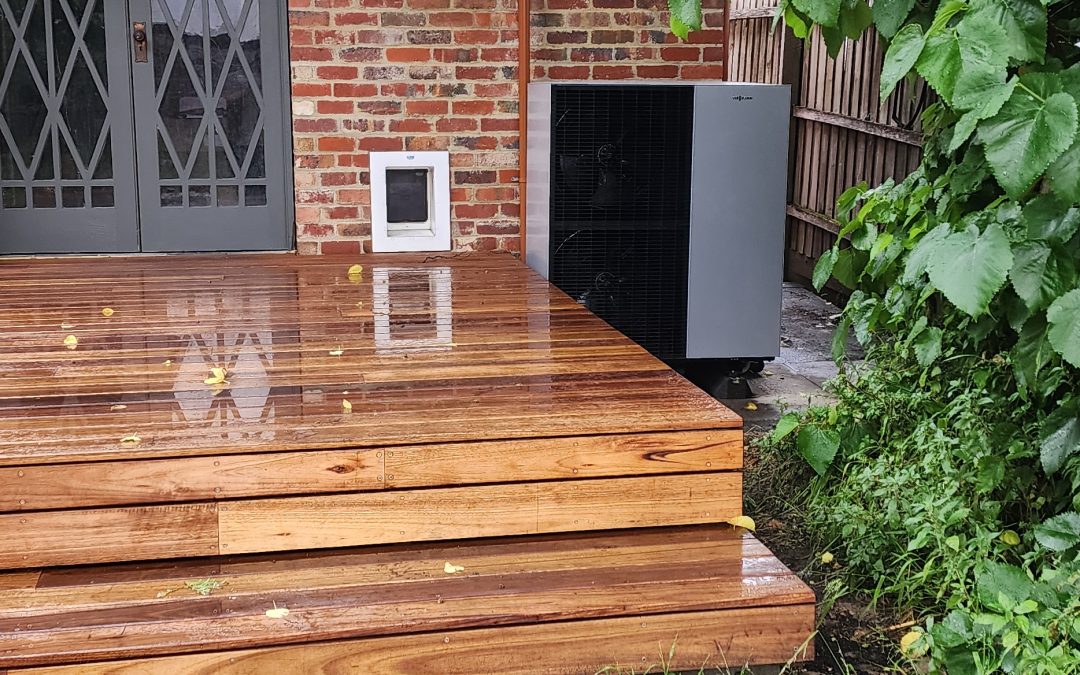
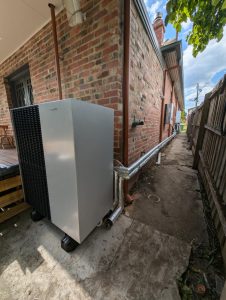
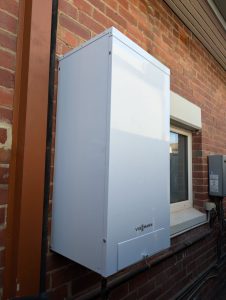
Kroll was asked to project manage an air-water Viessmann heat pump installation at Preston, Victoria. The legacy radiator network was deemed to suit a Viessmann. Installation was performed by ADH Plumbing of Essendon. Technical support provided by Viessmann engineers and Kroll Heaters.
Viessmann Vitocal air-water Heat Pump
Kroll in 2024 will be distributing the Vitocal Variant Heat Pump manufactured in Germany by Viessmann. These air to water units are ideal for domestic:
Floor Heating
Floor Cooling
Off Grid Users seeking high electrical efficiency
Note also that the Vitocal uses R290 [propane] refrigerant which has a very low GWP or global warming potential compared to R32 refrigerant, for example. In other words, far more eco-friendly than other refrigerants. R290 is also over 30% more energy efficient than R32 heat pumps. [Sources: ATMO Europe hydrocarbons21.com & Purdue University]
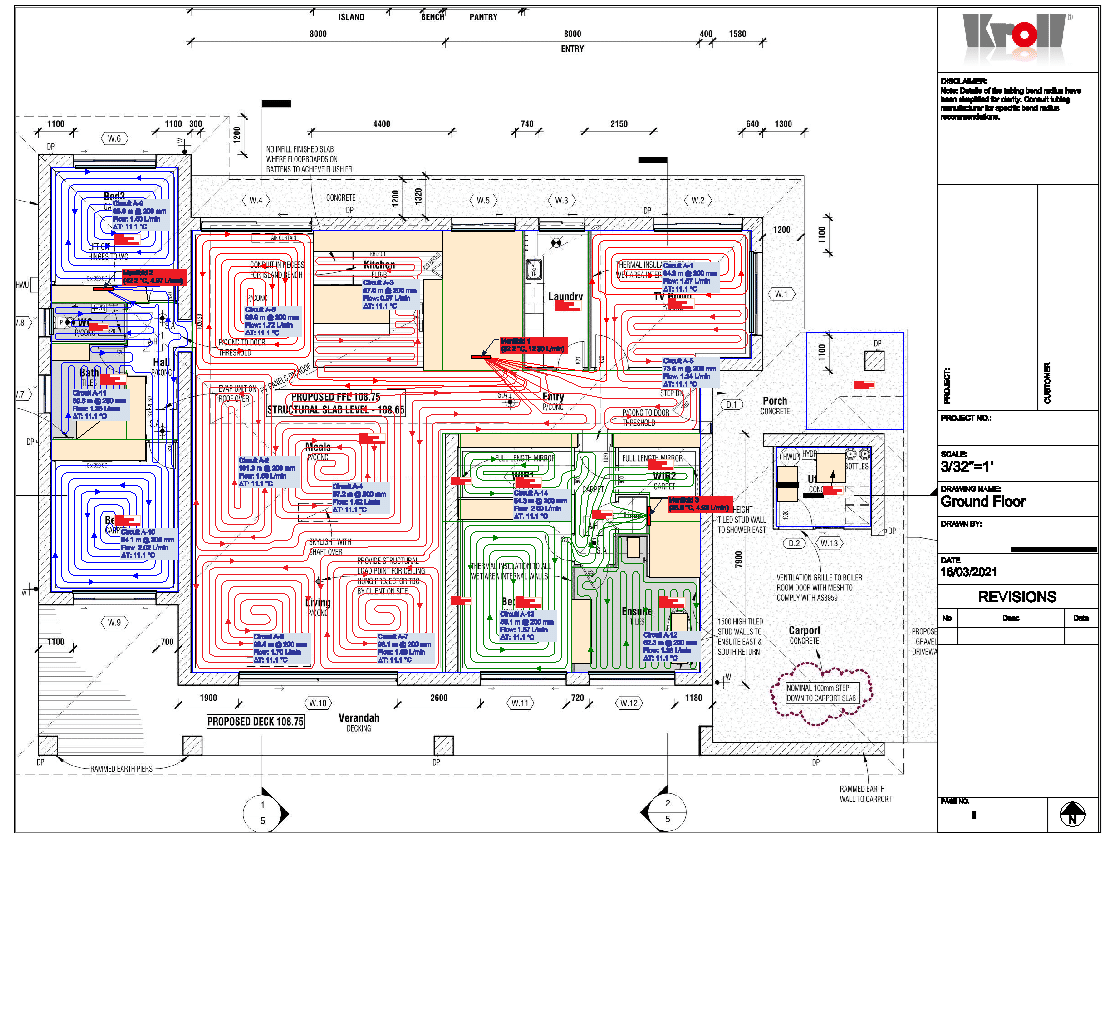
Off Grid people: Flow rates, pressure drops, tubing length, location of manifolds all supplied by Kroll’s Wood fired Hydronic Heating. Over twenty years of practice helps Installers and Builders & Owners to cooperate and complete projects. It’s all part of the Kroll process. Wood Log Heating and Wood Pellet Heating is possible. Check https://kroll-heaters.com.au/waste-oil-boilers/wood-boiler-kk-series/
The Caria Series is Certified to EN303-5 as over 93% efficiency
The Ventum series is Certified by EN303-5 over 91% efficiency
Power consumption
The Ventum KK30 and KK40 uses 200 watts or less.
The Caria CP23 and CP40 uses 100 watts and 120 watts respectively.
Examples of Cost
The KK30 System is $16,250 + GST. Remember: the System is the VG30, 1000l thermal storage tank, LK810 charge valve, LK519 wood safety, LK 924 valve, an air/dirt remover plus an Auto Fill valve
The KK40 System is $22,570 + GST. Remember: the System is the VG40, two by 1000l thermal storage tanks, LK810 charge valve, LK519 wood safety, LK 924 valve, an air/dirt remover plus an Auto Fill valve
The CP23 Caria Wood Pellet Boiler is $11,490 + GST
The CP40 Caria Wood Pellet Boiler is $15,548 + GST
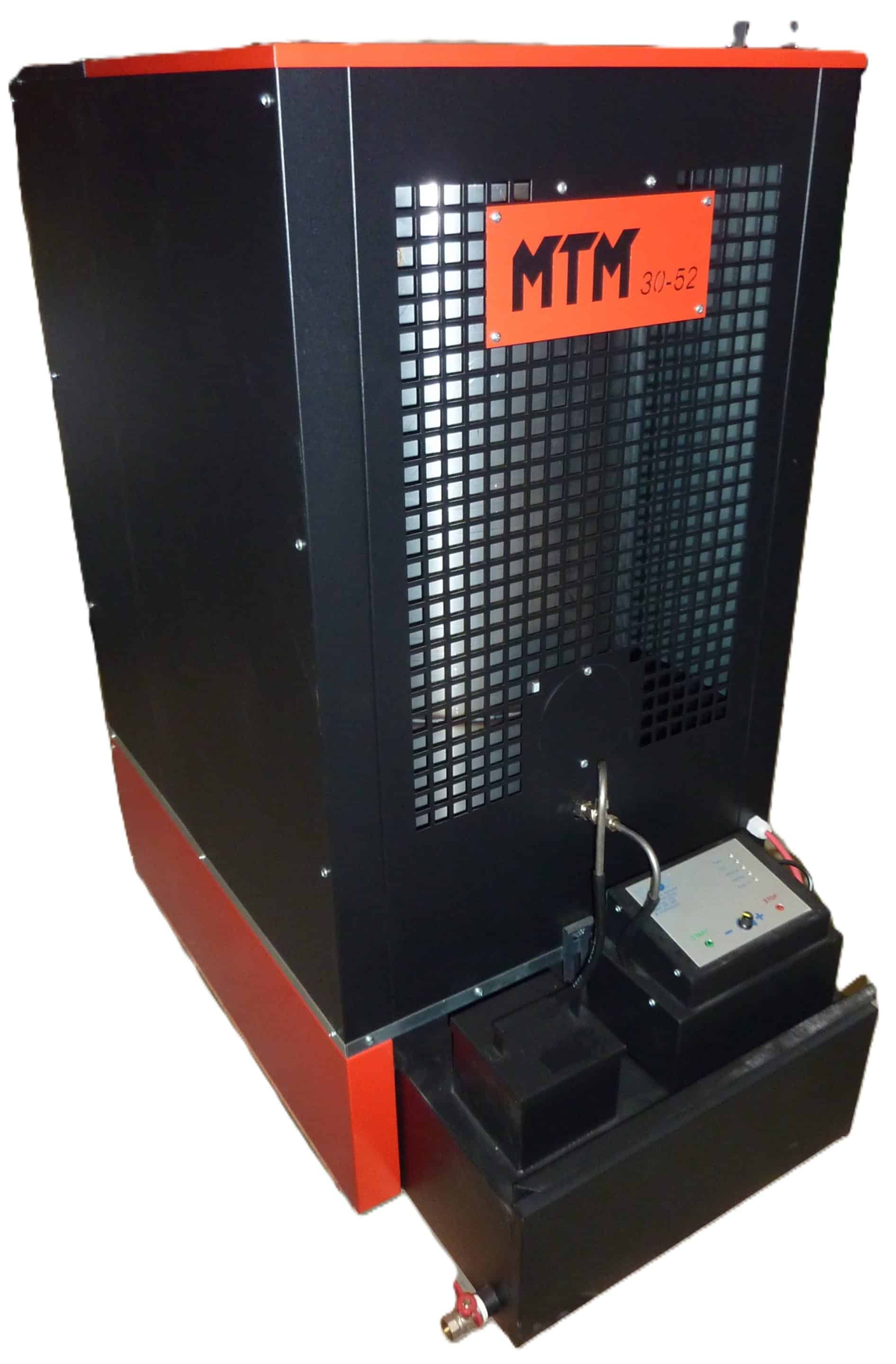
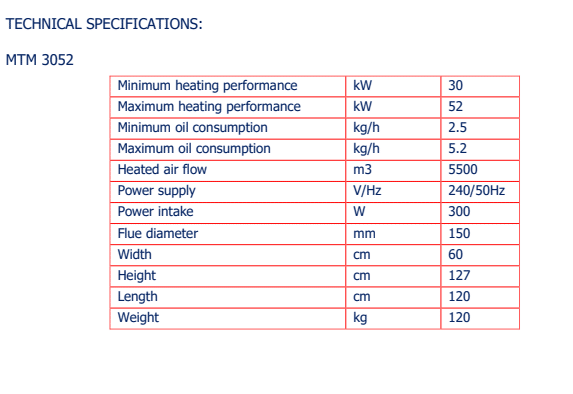
Heating with waste oil or used oils can be an extremely smart choice for space heating and/or floor heating in domestic and commercial applications. If your farm or workplace produces used oil why not get your heat for minimal cost. The waste oil can be used to heat up your workshop heating using the SZ furnace or the 52kW Kroll Kozy. The Kroll Kozy is a European made, drip-feed, manual start with a 90 litre WO fuel tank and puts out between 30kW and 50kW of warmth producing 5,500 cubic metres of air per hour. Fully AS/NZS 3100:2022 compliant, RCM certified for electrical safety, for 240vac 50Hertz.
Waste oil heating and waste oil burning is Kroll core business.
This means the precision burning of waste oils, used or unused automotive or vegetable oils for domestic or commercial heating. Space heating with waste oil heaters and hydronic heating from recycled waste & used oils is what we do for you. Commercial heating, home heating and hydronic design services are available. Recently wood gasification hydronic boilers have been available as well. So, waste oil and waste wood!
Kroll can provide the hydronic solution for your floor heating or hydronic radiator heating or a combination of the two.
Kroll fan coil units convert hot water into warm air similar to a how car radiator uses a fan to coil the engine water. We use the German made EMB burners to burn the oil. These are available in 20 kW power output up to 250 kW if required.
The powerplant is the German made EMB series burners, available from 20 kW to 250 kW
The German made EMB Series waste oil burner provides a broad range of power outputs.
The operation sequence pumps fuel out of the special Kroll day tank and into the burner tank. A float switch controls the level inside the burner tank and supplies power to an oil pump on the day tank. Another float switch (overflow protection) serves as a limiter, which switches to fault if the tank is overfilled.
The operation sequence pumps fuel out of the special Kroll day tank and into the burner tank. A float switch controls the level inside the burner tank and supplies power to an oil pump on the day tank. Another float switch (overflow protection) serves as a limiter, which switches to fault if the tank is overfilled.
A thermostat sets the oil temperature in the burner pre-heater tank and starts the burner when the set point temperature is reached.
Also, the automatic burner control system monitors the operation of the burner and provides diagnostics to the user. A special nozzle aspirates and finely atomises the fuel using the compressed air flowing into the nozzle[s]. Therefore, the compressed air serves as primary air for the combustion process.
The burner blower supplies the secondary air, which mixes with the atomised spray at the baffle plate. This ensures full combustion and operational reliability.
Also, at an oil temperature in excess of 150° C, the safety switch automatically de-energises the burner. The Siemens controller displays diagnostics. These burners mount to air furnaces like the Kroll SZ series or heat water in a hydronic boiler [water heater]. Talk to Kroll about your heating needs and hydronic design for domestic and industrial applications. Off grid users take note!
The operation sequence pumps fuel out of the special Kroll day tank and into the burner tank. A float switch controls the level inside the burner tank and supplies power to an oil pump on the day tank. Another float switch (overflow protection) serves as a limiter, which switches to fault if someone overfills the tank.
A thermostat sets the oil temperature in the burner pre-heater tank and starts the burner when the set point temperature is reached.
Also, the automatic burner control system monitors the operation of the burner and provides diagnostics to the user. A special nozzle aspirates and finely atomises the fuel using the compressed air flowing into the nozzles. Therefore, the compressed air serves as primary air for the combustion process.
The burner blower supplies the secondary air, which mixes with the atomised spray at the baffle plate. This ensures full combustion and operational reliability.
Also, at an oil temperature in excess of 150° C, the safety switch automatically de-energises the burner. The Siemens controller displays diagnostics. These burners mount to air furnaces like the Kroll SZ series or heat water in a hydronic boiler [water heater]. Kroll can help with your heating needs and hydronic design for domestic and industrial applications. Off grid users take note!
A Caria CP40 40kW fully automatic hydronic wood pellet boiler has been installed in country Victoria. After initial firmware updates to sort out a pellet feed issue, the CP40 Pellet Boiler is functioning correctly. Of course the automatic ignition, self cleaning features and minimal maintenance is assisting the owner greatly.
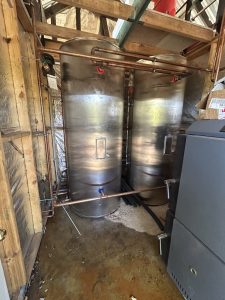
The CP40 wood pellet boiler is charging 2000l of water storage to 77C. A great feature of the CP40 operating system is the ability to tweak parameters remotely, an essential thing for a complex machine in a remote location.
Every parameter is configurable remotely. This is very useful to speed things up or down, vary boiler max temperature, vary maximum power, adjust upper and lower buffer parameters. The operation mode [running, ignition, supervision and halt phases are displayed]. The boiler power, flame size, pellet feed rate, flue gas temperature and boiler temperature are displayed in real time. The alarm register is there to be examined 24 by 7.
Flow rates, pressure drops, tubing length, location of manifolds all supplied by Kroll’s Wood fired Hydronic Heating. Over twenty years of practice helps Installers and Builders & Owners to cooperate and complete projects. It’s all part of the Kroll process. Highly Efficient options VG Ventum wood log and CP Caria Wood Pellet options, both over 91% efficient. Check https://kroll-heaters.com.au/waste-oil-boilers/wood-boiler-kk-series/
Examples of Cost
The KK30 System is $16,250 + GST. Remember: the System is the VG30, 1000l thermal storage tank, LK810 charge valve, LK519 wood safety, LK 924 valve, an air/dirt remover plus an Auto Fill valve
The KK40 System is $22,570 + GST. Remember: the System is the VG40, two by 1000l thermal storage tank, LK810 charge valve, LK519 wood safety, LK 924 valve, an air/dirt remover plus an Auto Fill valve
The CP23 Caria Wood Pellet Boiler is $11,490 + GST
The CP40 Caria Wood Pellet Boiler is $15,548 + GST
The German made EMB Series waste oil burner provides a broad range of power outputs. EMB power ratings are 20kW, 50kW, 70kW, 100kW, 150kW and 200kW.
The operation sequence pumps fuel out of the special Kroll day tank and into the burner tank. A float switch controls the level inside the burner tank and supplies power to an oil pump on the day tank. Another float switch (overflow protection) serves as a limiter, which switches to fault if the tank overfills.
A thermostat sets the oil temperature in the burner tank and starts the burner when it reaches the set point temperature.
Also, the automatic burner control system monitors the operation of the burner and provides diagnostics to the user. A special nozzle aspirates and finely atomises the fuel using the compressed air flowing into the nozzle[s]. Therefore, the compressed air serves as primary air for the combustion process.
The burner blower supplies the secondary air, which mixes with the atomised spray at the baffle plate. This ensures full combustion and operational reliability.
Also, at an oil temperature in excess of 150° C, the safety switch automatically de-energises the burner. The Siemens controller displays diagnostics. These burners mount to air furnaces like the Kroll SZ series or heat water in a hydronic boiler [water heater]. Talk to Kroll about your heating needs and hydronic design for domestic and industrial applications. Off grid users take note!

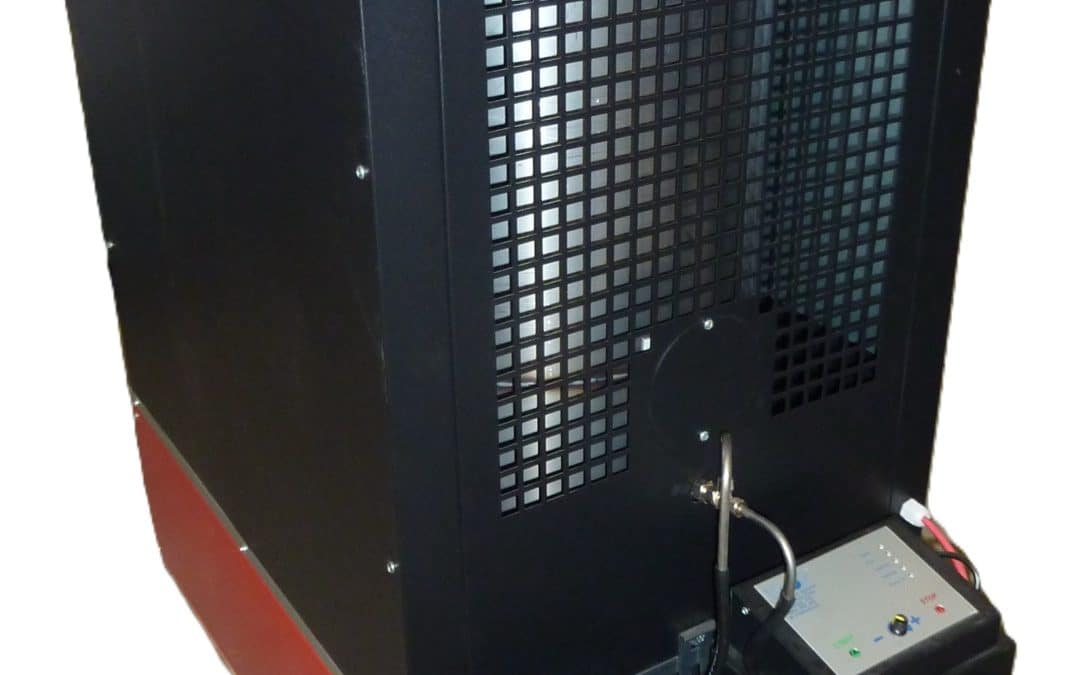

 Photo by
 Photo by
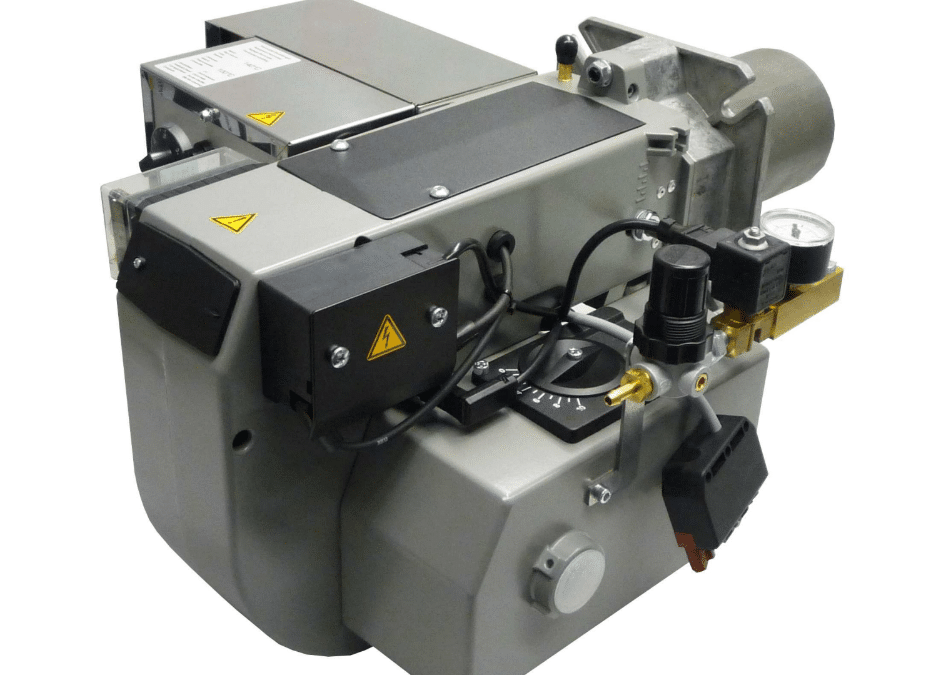
 Photo by
 Photo by


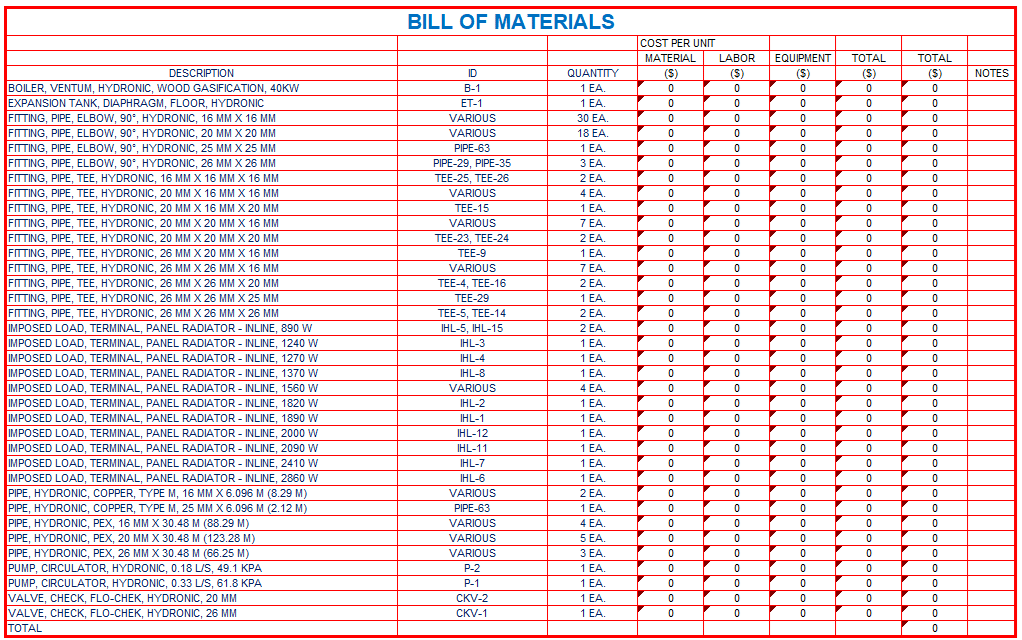
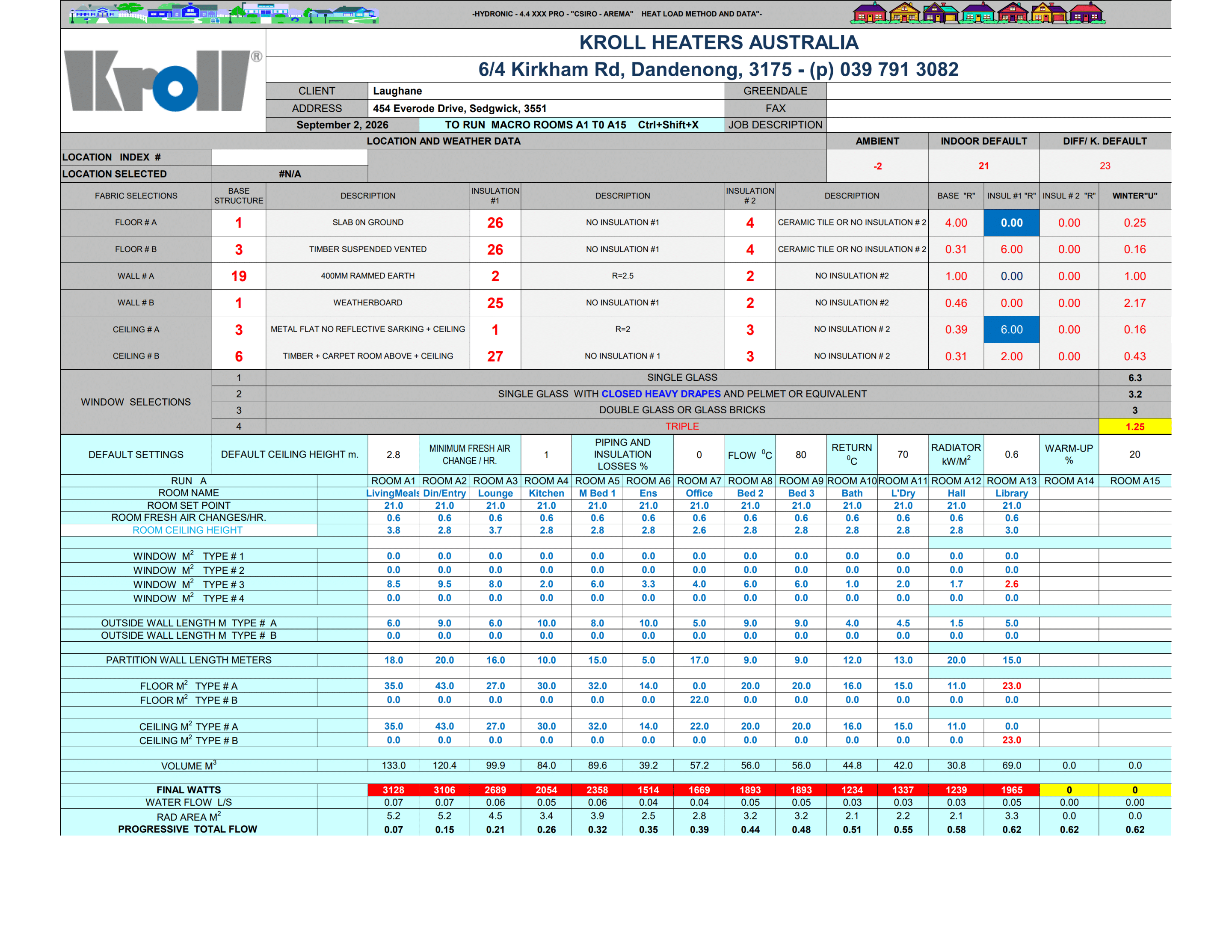
 Heat Loss Calculations designed by the CSIRO


Recent Comments